
Preparing for Self Defense with a Handgun
A Beginner's Guide

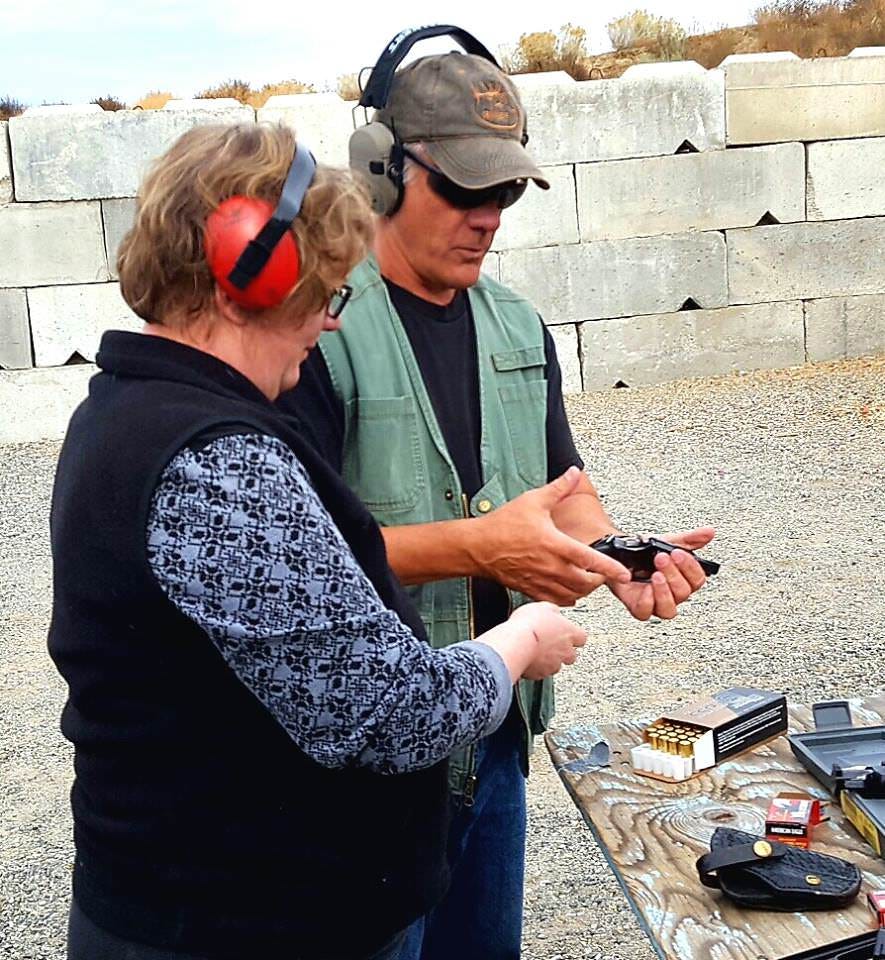
“Guy, while you’re here let me show you the new pistol I got for self defense!”
Oh goodness… When I know my friend isn’t a handgun shooter, but does sometimes hunt with either a shotgun, rifle or bow… Sometimes it all works out fine. But there’s an organized way to do this. Once you’re determined that you want a concealed carry or self-defense type handgun in your life:
1) Take a class. From a good instructor. Set aside the time and money and take a legit handgun class, preferably one focused on self defense. In many cases it’s okay to take the class without even owning a handgun! I’ve had quite a few folks who didn’t own a handgun come to my class where they got to sample a variety of semi-automatics and revolvers.
Taking a class will get you started correctly. You’ll learn gun safety - which is crucial! You should also learn about the laws regarding self defense, particularly in your state, county and city. You’ll get introduced to a variety of different handgun types.
A good self-defense handgun course will teach more than the basics. It will teach how and when to defend yourself, and very importantly when to back off and get out of the situation without even drawing your gun. You’ll learn to fight with your handgun, which is far beyond simply knowing how to shoot it. You’ll learn to move to cover, to shoot while only minimally exposing yourself to fire. You may learn to shoot by illuminating the threat with a flashlight. You’ll learn to load and reload your firearm rapidly and how to clear malfunctions.
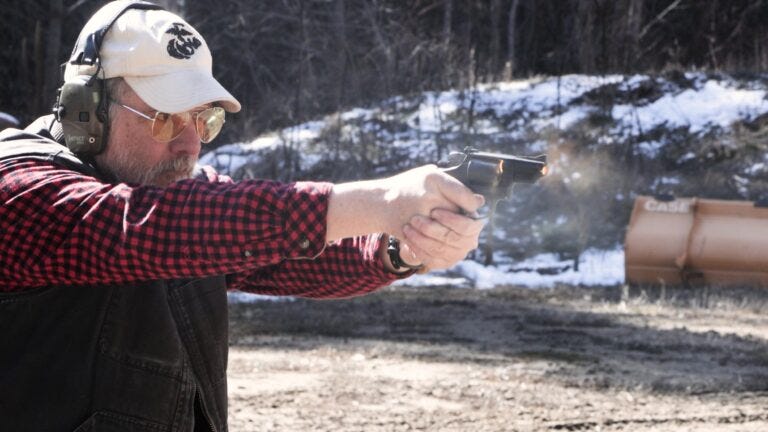
2) Get a permit to carry. Go through whatever steps are required for you to legally carry a handgun concealed on your person. In some states it’s very easy, in other states it’s a time-consuming and expensive process. Either way, you don’t want to carry concealed illegally! That can land you in jail pretty quickly. Also learn which states recognize your state’s permit. It should all be reciprocal, but it’s not. Some states have “constitutional carry” meaning if you’re not a convicted felon or otherwise prohibited from owning a firearm, you can carry concealed.
3) Get your handgun and accessories. Select the firearm with care. It should be what works for you and your situation. Will you be carrying it concealed or just having it in your home or vehicle? Is it something you’re comfortable with? Is it too big or too small to properly grip? Is it too complicated to operate quickly and well? Is it too powerful to control? Is it a quality tool or some piece of junk? Yes, there are poorly made handguns on the market.
My handgun toting friends carry a wide variety of handguns from tiny 22 rimfires to large and powerful full size revolvers and semi autos. Time to time I swap one handgun for another as the situation dictates but I stick with guns I know well through many hours of practice.
Accessories? YES. Some are very important for your handgunning success.
cleaning kit - guns require maintenance. For peak performance the gun needs to be properly cleaned and lubricated.
holster - you should have some way to carry the handgun securely. That might mean simple pocket carry or it might mean an expensive custom made holster, or something in between.
extra magazines and a mag pouch for semi-automatics
speed-loader or speed strips for revolvers
ear and eye protection - a must. I often use both ear plugs and ear muffs to protect what’s left of my hearing. Indoor ranges and covered ranges can be particularly noisy.
4) Ammunition. I like to have three types:
carry ammunition - some kind of typically expensive, top of the line defensive ammo
range ammunition - less expensive, often full metal jacket ammo intended for target practice. Using this will save you a lot of money! You should buy a LOT of range ammo as gaining and maintaining good pistol handling skills can require a lot of shooting and frequent range sessions. Money spent on more ammunition and training is generally better than spending money on yet another gun, or on fancy gadgets for your self-defense gun.
snap caps - I’ve found these to be quite valuable for training purposes. Not just for “dry fire” but for safely training loading, unloading and malfunction-clearing skills. They’re inert with no powder or primer, so they simply can’t shoot. Keep them separate from your real ammunition so there’s no confusion.
5) Insurance/coverage/lawyer. If you are someday involved in a self-defense shooting, you’re going to need very good legal representation. Several firms offer coverage, sometimes including training with the membership. I was a police detective. My job was to find a suspect and gather enough evidence to convict that suspect. A confession was a very important part of those cases. Remember, you have the right to remain silent, it’s an important right and I urge you to use it. Talk to a competent lawyer first. Someone who knows criminal law. Often the insurance firm you’ve hired has a legal staff that can help you. That is well worth paying for. Do your research before buying the insurance. Make sure the firm is reputable and has a history of protecting people involved in self-defense shootings. Coverage for this is very important!
6) Practice often. Handgun skills can certainly deteriorate over time. Once proficiency is gained, it’s good to maintain that skill by repeated range sessions. Typically those don’t involve an instructor, but if you’re still new at shooting, or if it’s been a while, a session with a good instructor can help considerably. For me, I find that fairly short, 50 - 100 round sessions repeated frequently are better than an occasional long day at the range with 500 rounds or more expended. Typically I’ll visit a local range weekly and limit my training to one or two boxes of ammo. I’ll also have specific skills in mind that I wish to practice. Like shooting with my support hand instead of my primary hand. That might just be important someday.
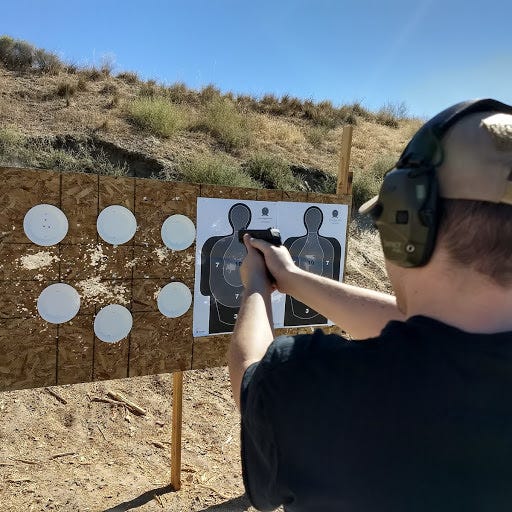
7) Alternatives. Hopefully you’ll never need to protect yourself from an attacker, but it happens. Having alternative forms of self-defense available, instead of relying only on the gun, is worthwhile. Martial arts/hand-to-hand skills can be very useful, but can also take a long time to master. Pepper spray or the newer pepper-ball launchers can be effective and are simple. Knives are still lethal weapons and in the right circumstances can mean the difference between life and death. Consider a walking stick or cane… Well-handled such a stick can be brutally effective. TASER is a useful tool for some. I didn’t use it often in police work, but it sure did work well, most of the time.
There’s a lot more to this whole subject. Books have been written. Videos made. It is often hotly debated on the internet. Learn all you can and be serious about this, carrying a firearm for self defense is a very heavy commitment. Your life and the lives of others could ride on how well you handle that commitment.
I’m a retired cop, detective, SWAT sniper and firearms instructor as well as a USMC veteran. Follow me here, on FB, Instagram and on Ultimate Reloader for more info on this and related topics. Carry discretely and shoot well if shooting is necessary!
Guy
Points to ponder (lessons learned from 1000's of lbs. of lead launched and 10's of lbs. of powder burned) for the person going out to purchase a self-defense handgun:
Don't get hung up on revolver v. semi-auto. If you select a quality (durable, reliable) gun, either will get the job done.
The gun must fit both your hands. If that high cap wondernine that holds 25 rounds in the magazine has a grip too big for your hands, you will not be able to shoot it up to your highest level of capability. If it's a revolver you really like, consider changing grips.
Pick a caliber you can control. Small/lightweight handguns chambered for powerful cartridges are no fun and actually painful to shoot. That usually causes bad habits and kills the desire to practice. With quality ammo, the 38 Special and 9mm represent very good choices.
Learn to "run the gun" that means shoot it, practice reloads, malfunction drills, dry fire, etc. It will pay off.
Ask questions. You learn that way. It may save you time and money as well.